How Many Rounds Are There in NEET Counselling 2026? Complete Guide to AIQ, State Quota, Mop-Up & Stray Vacancy Rounds
1. Introduction + What is NEET Counselling?
Every year, millions of students appear for the National Eligibility cum Entrance Test (NEET) with the dream of securing admission to top medical colleges across India. However, qualifying for the examination is only the first step. The next and equally important stage is NEET Counselling, where eligible candidates are allotted seats in MBBS, BDS, B.Sc. Nursing, AYUSH, and other undergraduate medical courses.
One of the most frequently searched questions among aspirants is “How many rounds are there in NEET counselling?” Understanding the counselling process is essential because each round offers an opportunity to secure admission to a better college or preferred course.
The Medical Counselling Committee (MCC) is expected to begin NEET UG 2026 Counselling after the declaration of the NEET UG 2026 results, tentatively in July 2026. The counselling process is conducted under two major categories:
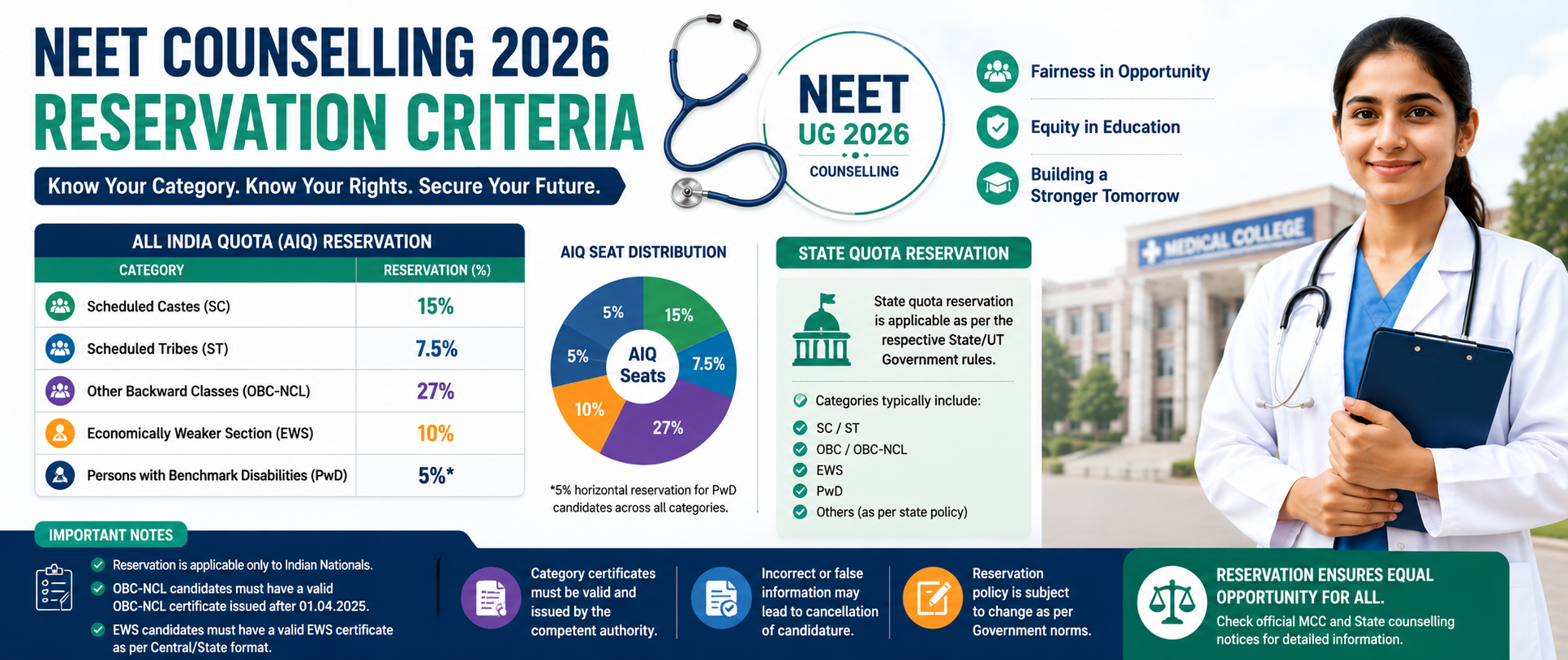
- 15% All India Quota (AIQ) – Managed by the Medical Counselling Committee (MCC).
- 85% State Quota (SQ) – Conducted by the respective state counselling authorities.
Apart from these, separate counselling is conducted for Deemed Universities, Central Universities, ESIC, AIIMS, JIPMER, and AYUSH courses.
A clear understanding of every counselling round helps candidates make informed decisions regarding choice filling, seat acceptance, upgrades, and reporting deadlines, thereby improving their chances of securing admission into their preferred medical college.
2. How Many Rounds Are There in NEET Counselling?
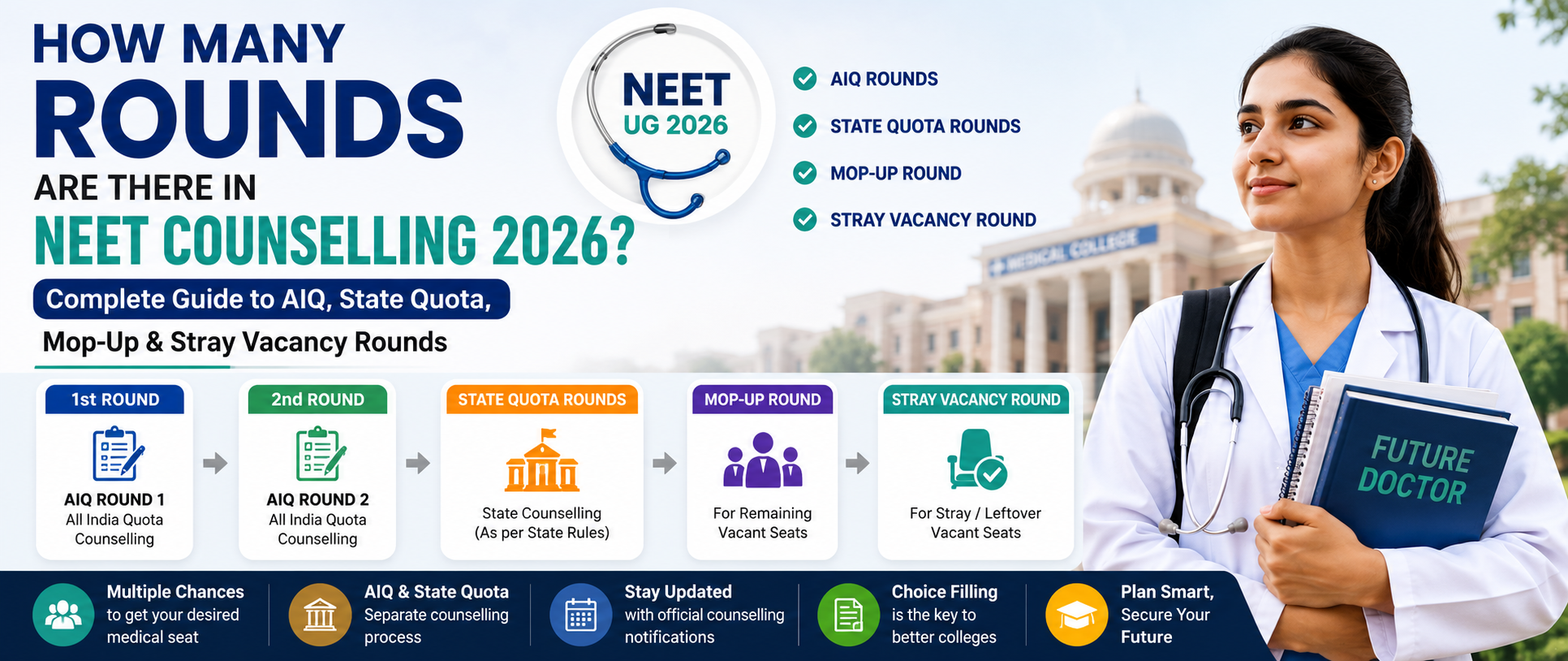
The NEET UG Counselling generally consists of four major rounds conducted for both the All India Quota (AIQ) and State Quota seats.
Round 1 – Initial Admission Round
The first counselling round is open to all eligible NEET-qualified candidates.
During this stage, candidates are required to:
- Register on the counselling portal.
- Fill and lock their preferred college choices.
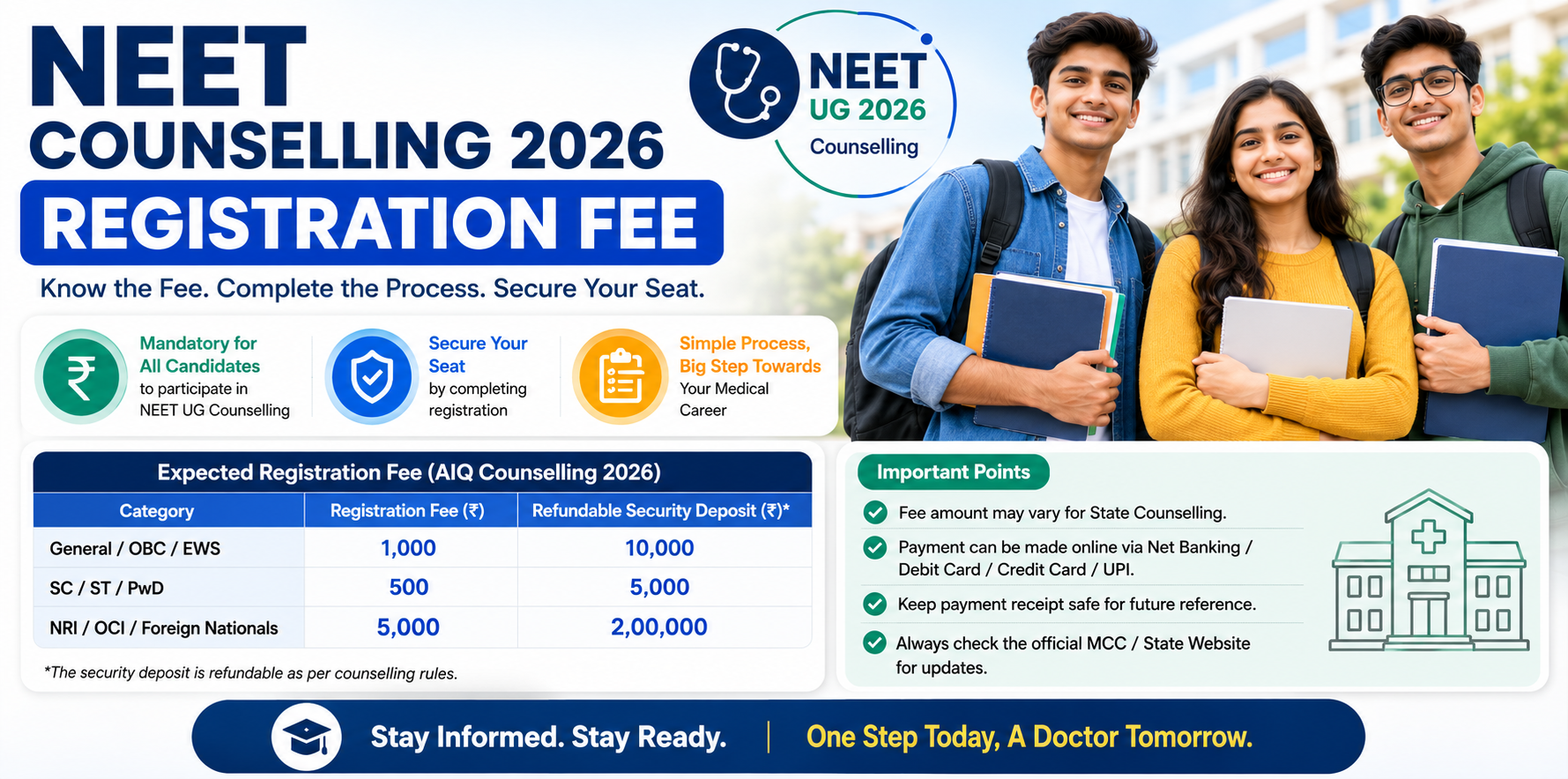
- Submit the counselling fee.
- Wait for seat allotment.
If allotted a seat, candidates can either:
- Accept the seat and report to the allotted institute.
- Choose an upgrade in subsequent rounds (subject to counselling rules).
Round 2 – Upgrade & Fresh Registration Round
The second counselling round provides another opportunity for candidates who:
- Did not receive a seat in Round 1.
- Wish to upgrade their allotted college.
- Missed registration during Round 1 (where permitted).
Fresh registration is generally allowed for AIQ counselling in this phase.
Candidates who obtain a better seat through upgradation must report to the newly allotted institute.
Round 3 – Mop-Up Round
After completion of the first two rounds, any remaining vacant seats are filled through the Mop-Up Round.
This round mainly benefits:
- Candidates who remain unallotted.
- Candidates eligible under counselling guidelines.
- Students seeking admission to seats that became vacant after previous rounds.
Generally, fresh registration is not permitted for AIQ Mop-Up counselling. Only eligible registered candidates can participate.
Round 4 – Stray Vacancy Round
The Stray Vacancy Round is the final stage of NEET counselling.
It is conducted to fill any remaining vacant seats after the Mop-Up Round.
Only candidates who do not hold any seat in previous counselling rounds are eligible.
Candidates who were allotted seats but failed to report or did not officially resign within the stipulated timeline are generally not eligible for this round.
This round is the final opportunity to secure admission before the counselling process concludes.
Summary of NEET Counselling Rounds
| Round | Purpose |
|---|---|
| Round 1 | Fresh registration and first seat allotment |
| Round 2 | Seat upgrade and fresh registration (where applicable) |
| Round 3 | Mop-Up Round for remaining vacant seats |
| Round 4 | Final Stray Vacancy Round |
Each counselling round offers a fresh opportunity to improve your admission prospects. Therefore, candidates should regularly monitor official notifications and counselling schedules.
3. AIQ, State Quota & Deemed University Counselling
NEET counselling is conducted under multiple admission categories to ensure fair allocation of medical seats across India.
15% All India Quota (AIQ)
The 15% All India Quota is administered by the Medical Counselling Committee (MCC).
Under AIQ counselling, candidates from any state can compete for government medical college seats across the country.
Key Highlights:
- Conducted by MCC
- Covers Government Medical & Dental Colleges
- Admission based on NEET rank
- Online registration and choice filling
85% State Quota Counselling
The remaining 85% seats are managed by the respective state counselling authorities.
State counselling generally includes:
- Government Medical Colleges
- State Private Medical Colleges
- State Reservation Policies
Eligibility usually depends on domicile requirements laid down by the respective state governments.
Counselling for Deemed Universities
Admission to 100% MBBS and BDS seats in deemed universities is also conducted through MCC.
Unlike state quota counselling, candidates from all states are eligible to apply.
Before participating, students should carefully review:
- Tuition fees
- Infrastructure
- Hospital exposure
- Recognition status
- Bond conditions
- Hostel facilities
AYUSH Counselling
Candidates seeking admission to AYUSH courses such as:
- BAMS
- BHMS
- BSMS
- BUMS
- B.Pharm (ITRA)
participate through:
- AACCC (Central AYUSH Counselling)
- State AYUSH Counselling Authorities
The counselling process differs slightly from MBBS admissions but is also based on NEET scores.
Understanding these counselling categories enables students to maximize their admission opportunities by participating in both AIQ and State counselling wherever eligible.